
With extra time in the area, we made some plans to slowly travel to Prince Rupert, visiting places and anchorages afresh.
The first proved to be a beauty, Taku Harbour, only 20 miles from Juneau. It is named after a division of the Tlingit tribe who used to live on the shores. It was a trading post for the Hudson’s Bay company from 1840 and in the early 1900s a commercial cannery was set up. We were protected from strong winds in an almost land locked anchorage, the odd small cabin on the shoreline with the decaying ruins of the cannery being swallowed by the foliage gave a cosy feel. A Harbour seal visited us and then a small craft with a young Alaskan couple trading freshly caught King Salmon for fresh ice. Excitedly we invited them on board for beers and traded for not just one fillet but a whole Coho too. They were enthusiastic about their sport fishing while holding down careers back in Juneau. Cody gave Stephen more advice on fishing, going through his tackle box and was suitably impressed by the contents. Once again the old charmer received more fishing tackle from our guests. Cody had been fishing all day in a cold wind under dull skies, clad in a pair of shorts and t-shirt in comparison with us in layers. They were staying in a rented cabin on shore and we visited the public cabin whilst stretching our legs. The main pontoon appeared new and substantial, plenty of room for many boats. A beautiful walk took us to the log cabin with a BBQ and fire-pit outside and inside huge wooden bunks with a stainless steel food preparation table and chunky table and picnic seats, heating was by a wood stove. Toilet facilities were in a separate hut. Very basic but looked like fun. Hey kids, we’ve found alternative housing for you if you don’t want to stay on Amelie!
A Rufous Hummingbird fluttered into the cockpit, drawn by the skippers red cap but soon exited in a cloud of pipe smoke!
Our first sighting of a Black Bear on the shore, close to Amelie came the following morning. This was very exciting, it appeared to be more inquisitive and industrious than the Grizzlies that we’d seen; climbing a rotten tree close to the water, cantering off into the trees and with its graceful movement looking very huggable but that’s not an experience that we would cherish. Later that day we saw a smaller Black Bear from the kayak. Stephen believed it was a sow. She was extremely active, nuzzling in rotten fallen trees for ants and beetle larvae and raising herself on her hind legs to reach berries from an overhanging bough was an amazing sight. At one point she entered the water, Debbie was ready to paddle frantically out of danger but she had noticed us and climbed out and foraged along the bank, watching us now and again. We watched her as she gracefully and sure footed made her way along the bouldered shoreline, overturning stones and constantly eating, fattening up ready for her hibernation in early November. Throughout our stay in this idyllic anchorage we had many sightings of Black Bear but the best was yet to come. The last morning, Stephen alerted Debbie that there were two bears fishing in the stream. Bears generally keep their distance from one another unless they are a sow with her cub. The Sow was a brownish colour with an ebony cub almost as large as her. The Sow was on alert, protecting her cub and was watchful as a small motor boat landed on the shore. She moved towards them and then fled into the forest leaving the juvenile fishing. The crew of the boat threw a bear scarer on the shore which scared the juvenile off, we jumped out of our skins. That was our last sighting and the boaters alighted and opened up their summer cabin.
We up anchored and decided to fish while making our journey to Gilbert Bay. We were thrilled to hook and board a 3 kg Coho Salmon, Stephen at the rod and Debbie netting it. Supper was caught and plenty more for the freezer. Cody’s new hook proved to work. Gilbert Bay is close to Tracy Arm Cove with it’s glaciers. Stephen heard a terrific roar at dusk and we could only think this was glacier calving. Howls from many creatures came from the shore, presumably Coyotes but we had no sightings.
At risk of repeating ourselves, our next anchorage was one of the most beautiful to date. We motored in glorious sunshine and blue skies, arriving at Windfall Harbour, on the west side of Seymour Canal mid afternoon. Nearby was the Stan Price Bear Sanctuary at Pack Creek, on Admiralty Island, where twenty-four Brown bears are protected with limited visitors requiring an expensive permit to enter. This facility is managed jointly by the US Forestry Service and Alaska Department of Fish and Game. Admiralty Island has a population of between 1500 and 1700 Brown bears who roam freely. We saw plenty of Bald Eagles (which were noticeable by their absence in Glacier Bay) and various seabirds clogging up the low tide shoreline, having a feast. The salmon were jumping all around us, as we lounged on our director chairs at the back of the boat, sipping cocktails. We took the RIB for a spin to explore the bay whilst a seaplane was circling overhead, getting pretty close to the mountains. The sky changed colour throughout the day becoming more spectacular towards dusk. We were the only boat and the quietness was palpable.
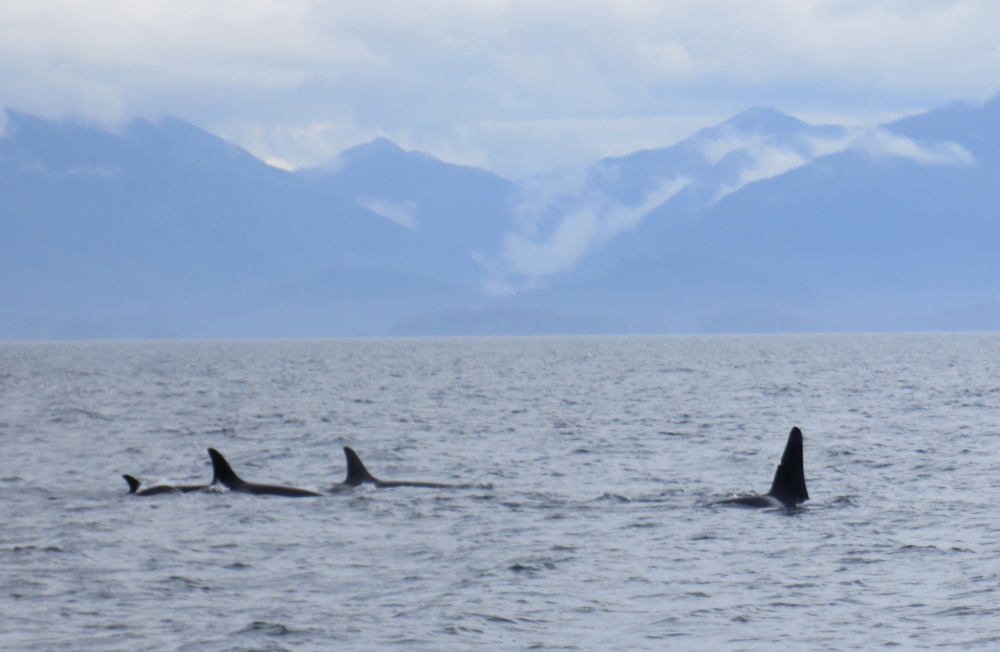
At dawn the following day we left Windfall Harbour with rays of sunshine streaming across the water, Humpbacks and Orcas were feeding close by with Dall’s Porpoises cavorting in our bow wave later in the morning, these stumpy, fat creatures are quite comical, inquisitive and super fast swimmers, their display lasted for about ten minutes bringing a smile to the crew on Amelie. The sightings of Humpbacks, spy hopping, breaching, finning and fluking was constant throughout our 9 hour trip, the odd few getting very close to Amelie. We eventually dropped anchor in Cannery Cove in Pybus Bay off Admiralty Island. It is almost landlocked with a small settlement at the head of the cove. It is renowned for Halibut fishing and crabbing, so the trap was set and some jigging was on the agenda for the next day. We experienced our first williwaw, a strong wind pounding down through the mountain range over the bay. The anchor held fast in sticky mud. Phew!
We explored the cove the quiet way, by kayak, not only great exercise but we are able to get closer to the shore and listen to the various calls from deep in the forest. We were astounded by the huge shoals of spawning salmon and three Harbour Seals followed us around making sure we didn’t fish for them. We’ve been told that the meat from spawning salmon is not very tasty, not that this bothered the seals, who played and tossed them in the air before gulping them down. Several times we saw the three seals fighting over one catch and the seabirds were having a field day too. One of the seals had been visiting Amelie and its bark sounded like a smokers’ cough. Maybe he/she had come for a nicotine fix from Stephen’s pipe and cigar smoke. On our wanderings we saw a beautiful motionless Belted Kingfisher watching from a bough overhanging the water, we had seen a similar bird in Juneau on the pontoon pilings and also at Hoonah.
Cannery Cove is extremely beautiful with a massive wooded valley at the head and in the distance a gigantic glacial mountain range. The sun was at times too hot to sit out in which was surreal as surrounding us were mountains with snow and ice in the gullies.
Rain does not deter bears, as was evident the following day. Two Brown bears were cantering together along the shoreline, clambering over rocks in their path and then vanishing into the trees.
It was a dense, foggy morning when we left Cannery Cove for Petersburg, at times we had very limited visibility which was spooky when a gigantic Humpback decided to blow and dive right beside Amelie. We had the radar on during the trip with our eyes getting sore from the icy, damp fog.
Petersburg has a Norwegian and fishing heritage, founded by Peter Buschmann in 1891. He wanted to build a fish-processing industry and with the abundance of salmon and halibut, natural harbour, timber for building and a huge supply of blue ice from Le Conte Glacier, he was successful. Many Norwegians joined him and built up a stable enterprise amongst a Scandinavian community preserving the Norwegian heritage, although fluency of the language has almost died out now.
Halibut made Petersburg famous as it was packed in glacial ice and shipped to Seattle and then distributed to the East Coast markets, hence the title, “Halibut capital of Alaska”. The more expensive fish are transported to Germany nowadays and since Brexit, the export fish to the UK has taken a hit.
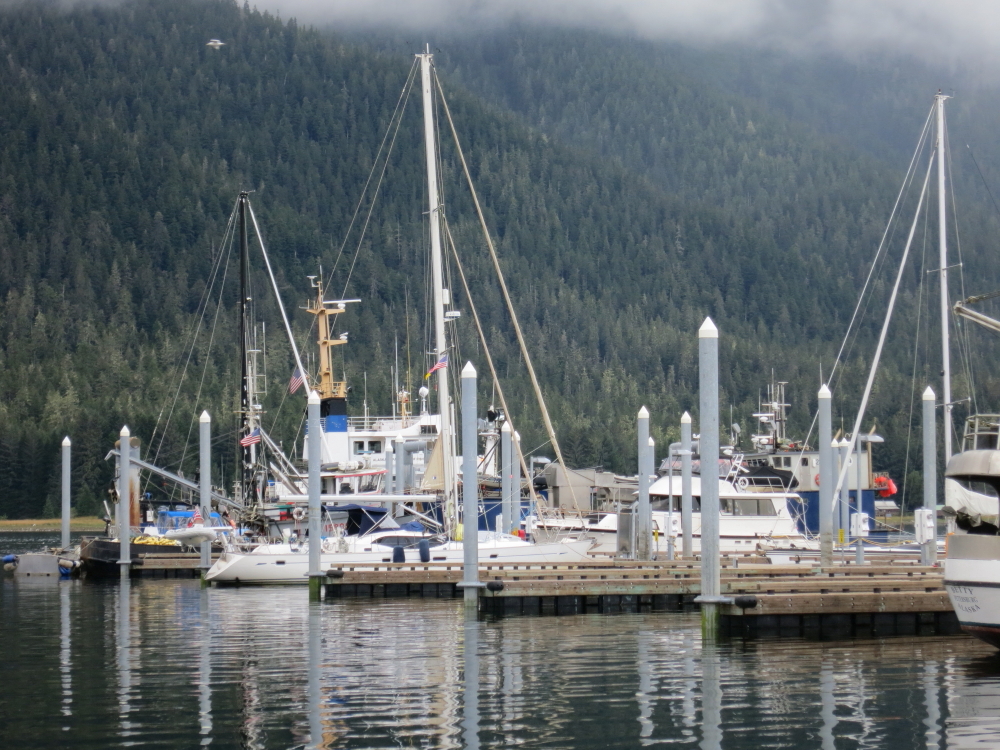
We explored the town by foot in sunny, hot weather. It didn’t take us long but made a favourable impression. The old buildings, docks and warehouses are being used as they were in the early days. Some of the streets are the original wooden piers straddling the creek, they look well worn but strong. We felt as if we had walked back in time when we meandered down Sin Lee Alley, as this was the centre of early Petersburg with it’s brightly painted and floral decorated houses and hanging baskets erupting with colour are everywhere. The town is refreshing as it is not touristy apart from the odd gift shop which sells local arts and crafts, including Norwegian jumpers, and has well stocked supermarkets, a hardware store to die for and the most wonderful book shop in a quaint old house off Sin Lee Alley.
The sea is the heart of the town bustling with boats unloading their catch, the fishy aroma of the processing plants, the nets being checked and stowed, the fishermen in their heavy weather gear wandering around the town after work and the Bojer Wikan Fisherman’s memorial to those lost at sea.
The local paper kept us amused with it’s reporting of the few minor criminal matters, even down to parking tickets. Anonymity was protected in the stories.
The central library seems to be the hub of everything in town with close connections to the “Sons of Norway Brotherhood”, a charitable and social body.
Modern buildings house the courts, federal and the future police station, luckily situated together as their structure stands out like a sore thumb compared to the other buildings. The town has a definite demarcation line between private dwellings, some of which are spectacular and the huge, muddy trailer park.
The few bars are full of fishermen after their days work and the aroma of unwashed bodies was overpowering in Papas Pizza Bar although the homemade pizzas looked amazing. We enjoyed an early Al Fresco supper in Inge’s Galley with exceptional fish (in a basket) and drinking a good Malbec from a jam jar. Most of the deli type eating establishments close after 2pm, leaving Papa’s pizza, Inge’s, Mexican, Chinese and Thai as our choice in the evening. We mostly eat on board as the quality of food, wine and company is by far, better.
Amelie was moored amongst fishing boats in a working port, plenty to watch whilst having Happy Hour but the smell of the processing plant nearby was invasive. Despite this we found a great charm to this place and thoroughly enjoyed our stay.
Time to move on south to visit more anchorages and to cast our fishing line along the way.
Under darkened skies we motored down Wrangell Narrows, with the weather getting worse by the hour. The wind picked up and we enjoyed our first sail for a while but we soon got headed with gusts of 30 knots on the nose. The sea piled up, the current was against us and the last few hours were a battle. What a relief it was to enter sheltered Coffman Cove on Prince of Wales Island, a beautiful old logging camp with a small community. We were treated to a magnificent firework display later that night, as good as the Bocas displays at New Year.
The forecast was for similar weather the following day so we headed out early and enjoyed some sun and a spot of Salmon fishing along the coast. We had many strikes and in the end we caught two salmon. We have successfully experimented with smoking the fish in foil parcels on the BBQ, using various homemade marinades.
During late morning we sighted a large pod of Orcas fishing alongside us, with their distinctive erect dorsal fins (fins for adult females reaching 90cms and adult males 180cms). Cameras and binoculars were at the ready. Orcas are the largest members of the Dolphin family, the apex predator in marine systems and three ecotypes of Orcas can be identified; Residents, Transient (Bigg’s) or Offshore. The Residents primarily feed off salmon; Transients off marine mammals such as seals and porpoises and lastly the Offshores who are rarely seen in these waters, feed off bony fish and sharks. The Offshores teeth are generally worn down (reports suggest due to the tough skin of Sharks) unlike the other two who have sharp, spiky teeth with minimal wear. Apart from their different dietary preferences, these three ecotypes do not associate with one another or interbreed despite sharing the same oceans. Orcas are social and live in groups….pods. The Residents are matrilineal composing an older female with her sons and daughters and her daughters’ off spring. They sometimes travel in Super-pods with related matrilines and have vocal calls which are unique to the group. When foraging the pod spreads out sometimes over several square kilometres, swimming in the same direction, communicating by underwater calls. They find their prey by echolocation and do not appear to herd or capture prey cooperatively. They rely on individual effort with the occasional help from a close member of the matrilines. Transients travel in groups of 2-6 and their offspring often disperse for long periods and sometimes forever. They share a distinctive set of calls which is identified by other Transients. Their hunting technique is one of silence and stealth in groups circling small islets and reefs. They use cooperative hunting tactics to catch and kill their prey, either encircling and tiring them or tag hunting, whereby the whales take it in turns to chase prey until it is exhausted. They also use herding tactics for large numbers of prey chasing them into shallow and narrow bays, sometimes beaching their prey where they can have a feeding frenzy. Offshores tend to travel in huge pods, not all related. Little is known about the Offshore’s hunting but they also use vocal communication.
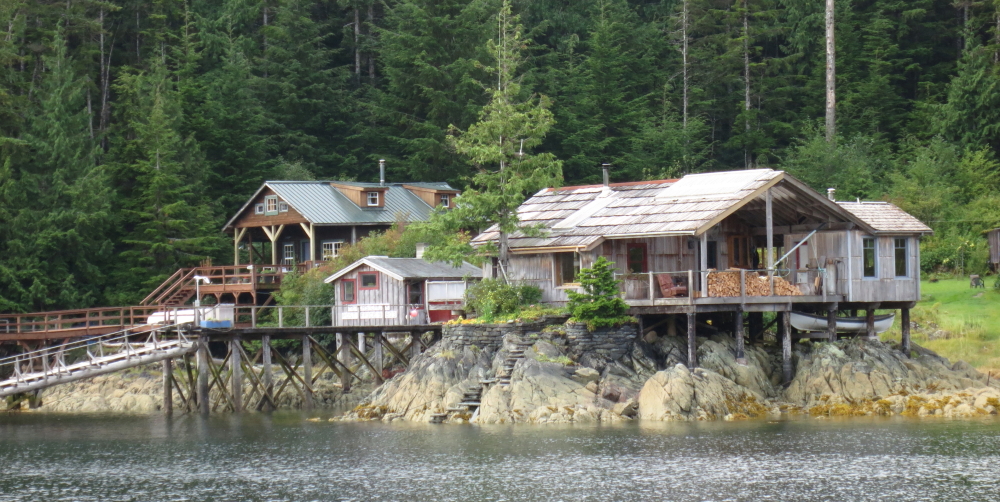
Next stop along the Clarence Strait is Meyers Chuck on Meyers Island, a small harbour with complete protection. Our first impression was a quiet, quaint looking fishing village with a mixture of cruisers and fishing vessels, moored on the public pontoon or like us, anchored in the tight bay. We could see why the pilot book said that it could be easily missed. Despite the deteriorating weather, we decided to stay an extra day to explore even if it meant donning foul weather gear. As we were going ashore for our stroll a seaplane, circled the cove and landed at the public dock, depositing and collecting passengers. It’s takeoff was alongside Amelie and we held our breath watching the ‘plane leave the bay. Meyer’s Chuck is a scene out of a fairy tale, wooden copses and trails through the trees, leading who knows where? Wood smoke puffing out of the chimneys of the inhabited buildings whilst the summer lodges look empty and lifeless. Old and new homes nestle beside one another, some looking like gingerbread houses but overall a cosy feel to the place. The old post office lies across the harbour on its own tiny island and we had the pleasure of meeting the postmistress twice, once hawking her Cinnamon rolls to us, waking us from our slumber and the second time in the wonderful gallery with works of local artisans and artists. The smell of Cedar in the gallery was warm and inviting with an old wood stove on one wall. Walking around this hamlet we came across the angling club which was also the small machine shop, with an industrial wood saw outside and various tools hanging on nails near at hand.
Judd Harbour, Duke Island was to be our last Alaskan anchorage before re entering Canada, followed by another dawn start and heading back to Prince Rupert to collect Jaz.
Alaska made a huge impact on us with a renewed respect for mother nature. It was a huge privilege seeing wonderful creatures in their natural habitat rather than captivity with us as guests in their world.