

Our original plan was to sail from Curacao to Santa Marta at the base of the Sierra Nevada to visit the “Lost City” of Tayronas. The “Lost City” was built approximately 700 AD and became the premier urban centre of the Sierra Nevada. It was an exciting archeological discovery during the last century and recently has become very popular. It would have entailed hiking, camping and using inadequate facilities, as the influx of tourists has overwhelmed the various camp facilities.
Consequently and alledgedly there is a rampant bout of Dysentery raging like wildfire through the hikers. We were not about to take the chance on one or both of us becoming ill so we missed Santa Marta and sailed for three days to Cartagena. Cartagena (pronounced Cart-a-heena) has existed for about 500 years and it’s history, like so many of the places we have visited, has a bloody past.
A Spanish naval commander, Don Blas de Lezo, also affectionately and respectfully named “Half Man” (due to losing his left leg, right arm and right eye in various naval battles) was commissioned to defend the city of Cartagena from the British. He had 6,000 men under his command, of which, a large number were slaves and Indians, whereas the British had 186 ships, 2,000 cannons and almost 30,000 military troops. The sheer fierce and determined resistance of the Spanish overcame the British with many of the troops dying of dysentery, malaria and yellow fever which rendered them unfit for the ferocious assaults by the Spanish. King George the second of Britain ordered that noone could speak or write about the defeat.
Cartagena in 2015 is a contrast of old colonialism and modern ocean view skyscrapers.
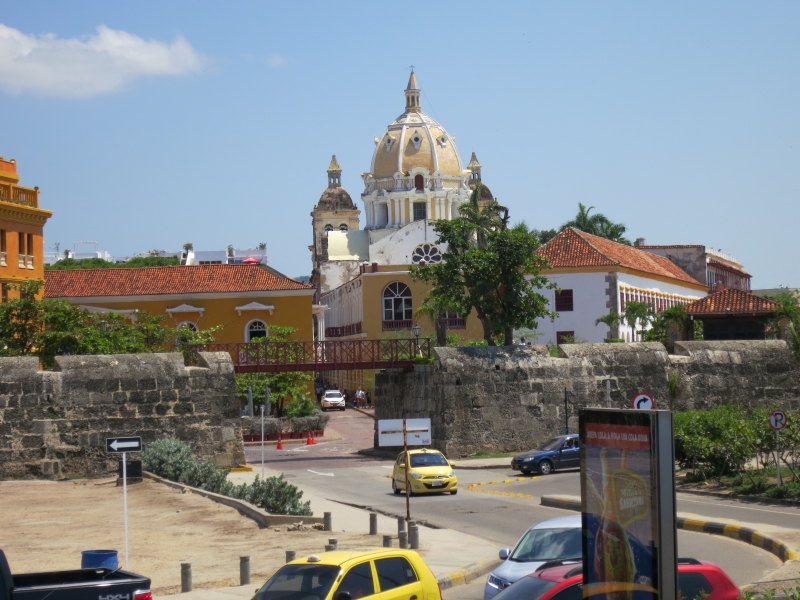
The old city or Walled City as we called it, known by the Cartagenians as El Centro is the heavily-fortified Spanish town that was the key strongpoint of the Spanish Empire on the north coast of South America, the Spanish Main. It took over a hundred years to build the huge, thick stone walls to protect the city which encloses beautifully preserved plazas, churches, balconies overlooking narrow streets, monuments, sculptures, gardens and massive colonial buildings.
We moored in a marina called Club de Pesca, just a ten minute walk to the Walled City. We were welcomed by various officials on the dock, who couldn’t do enough to help us. David our agent who could speak reasonable English quickly checked us into Colombia and within a few hours we were off Amelie, exploring the Walled City. Our first impressions were “ What’s everyone raving about?” but we spent most of our afternoon in the residential area, which is pretty but very quiet. The city shows it’s true glory when the light goes. The following day after a fabulous sleep we explored further into the old and the new parts of Cartagena. We were staggered by it’s beauty and friendliness.
Is Cartagena safe? After the ‘eradication’ of the infamous drug cartels in the 1990s, Colombia as a country has pulled out all stops to encourage tourism within a safe haven. Caragena is very safe provided you stay within the tourist areas but caution is needed like in any other city in the world if you decide to go outside these areas. We felt safe at all times. The currency is the Colombian Pesos but most establishments were happy with US dollars. The temperature is generally up to 32 degrees centigrade but the high humidity makes it feel much warmer and chores on the boat are taxing. We arrived in Colombia at peak rainy season where rain is infrequent but torrential for short periods. The lightning storms with thunder claps were an every day occurence with spectacular shows.
Stephen was thrilled to find that the Colombians produced coffee and hand rolled cigars. To start with the only cigars on offer appeared to be from street sellers, they had the benefit of being cheap but the cigar debris in our cockpit will as Debbie attests mean that they were not well made. At last a proper cigar shop/bar was discovered on a mission to get Debbie’s hair cut. Stephen savoured their delights whilst the lovely Cesar tended to Debbie’s coiffure needs. A new woman walked out of the salon with a new look and an extremely happy bounce to her step. We celebrated with a tot of the local liqueur and a parcel of delicious cigars.
He was not so tempted by the leather goods and emeralds!
The mild temperatures, fertile soil and heavy rainfall of the Andes Mountains of Colombia are perfect for the growing of Arabica coffee. The coffee plantations are normally small at 8 acres and provides work for the whole family. Traditional, secret methods are used by the Cafetero (Colombian Coffee Farmer) which the Colombians believe is the answer to their strong taste and aroma. Naturally we found a coffee shop which sold coffee from such a farm. Strong and slightly bitter but would certainly wake you up in the morning.
We frequently ate out as it was so cheap. Most menus had whole red snapper with coconut rice and flattened circles of unsweetened plantain (patacones). One of Stephen’s favourites was the Cazuela de Mariscos, seafood stew which he ordered quite a lot.
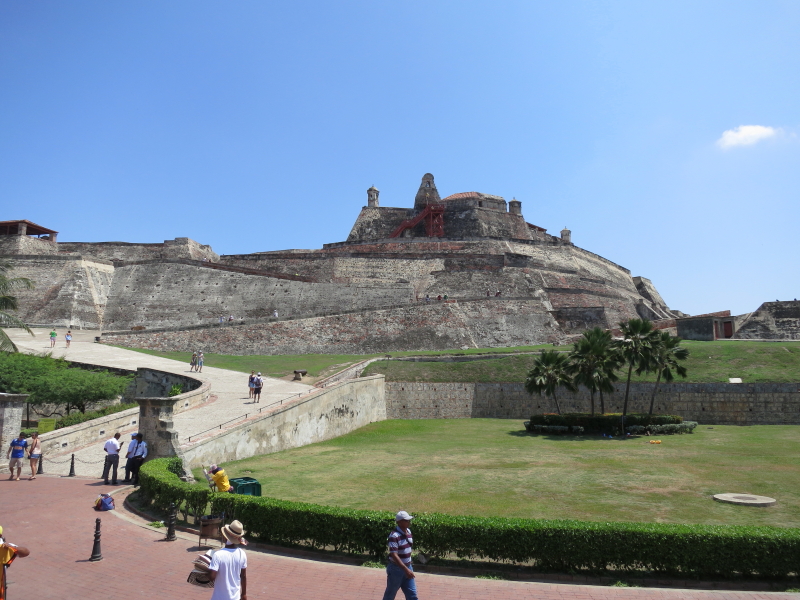
After a couple of days we were joined by Bubbles and enjoyed several days eating out at wonderful establishments and doing the city tour by open topped bus. We managed to get great pictures of the ancient San Felipe Fortress which was hugely important in the siege of Cartagena, distant shots of La Popa Monastery which is still run by the Augustian Order and the spires of La Catedral and Santo Domingo. The bus took us along the Bocagrande with the long sweeps of beach into El Lagito, where all the high rise hotels, apartments, shopping plazas are and back to the Walled City past the Naval college and hospital. It was a great overview of a contrasting city and views of outlying areas. We duly introduced Karin, Leo and Zubair to the delights of the Clock pub. A typical English bar (they didn’t speak English, either!) looking out over the famous Plaza de la Aduana with the Clock Tower. This is the historical site of the slave auctions. They produced mean Mojitos at a slow pace but certainly worth it.
Bubbles and Amelie dined in some of the most beautiful restaurants in the city. Courtyard dining with the old city wall looming up beside the tables, adorned with cascading foilage together with fresh water spas, romantically illuminated. The first night we ate at Carmen (our favourite) we were casually dressed and the table was reserved for others after an hour and a half. We were greeted and treated like royalty, there wasn’t any pressure to vacate the table, service was efficient and discreet and naturally the food was a work of art and delicious. Rather than hurry us away we were offered seats by a small pool to finish our wine and sample their coffee. One of the most memorable meals we have eaten together with good friends. Restaurant Alma was similar and very reasonable.
Babe and Skylark joined us shortly before we departed. Naturally we got together in the evenings for food, wine and good banter.
Debbie ended up taking Leo and Stephen to her new friend, Cesar, who transformed the men into slightly tidier versions of what they were before!
A week flew past and it was time to move on to pastures new. Bubbles and Amelie said their farewells to Cartagena and sailed sprightly to the Islas de Rosario.